
Ogród Autopoietyczny
Patrycja Pi Pa Piwosz
Pyramida Gallery Poznań, 2025

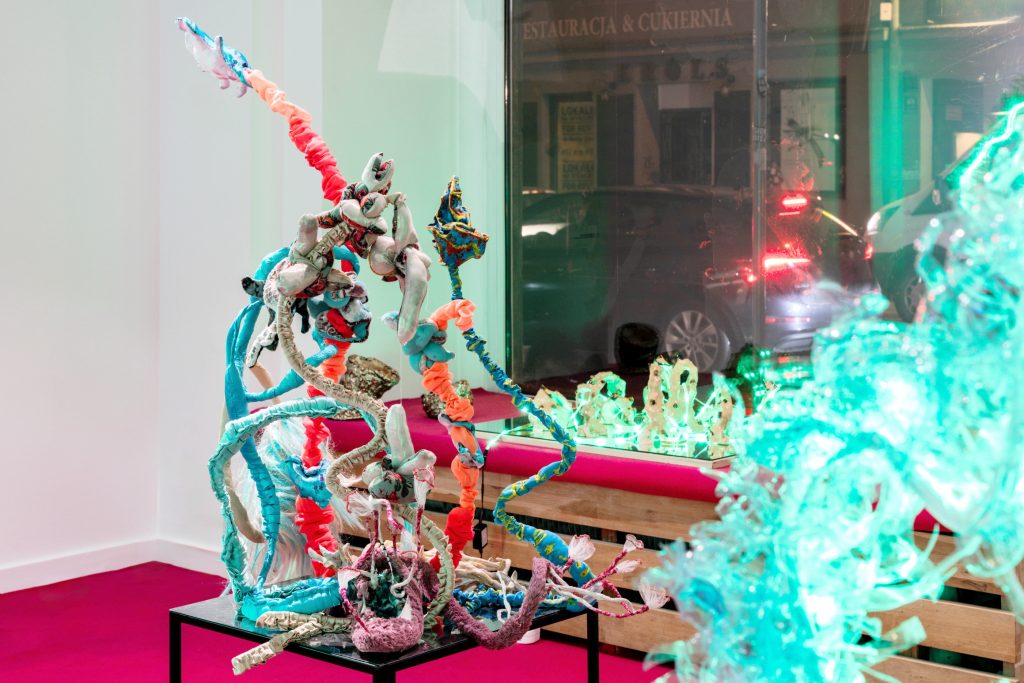
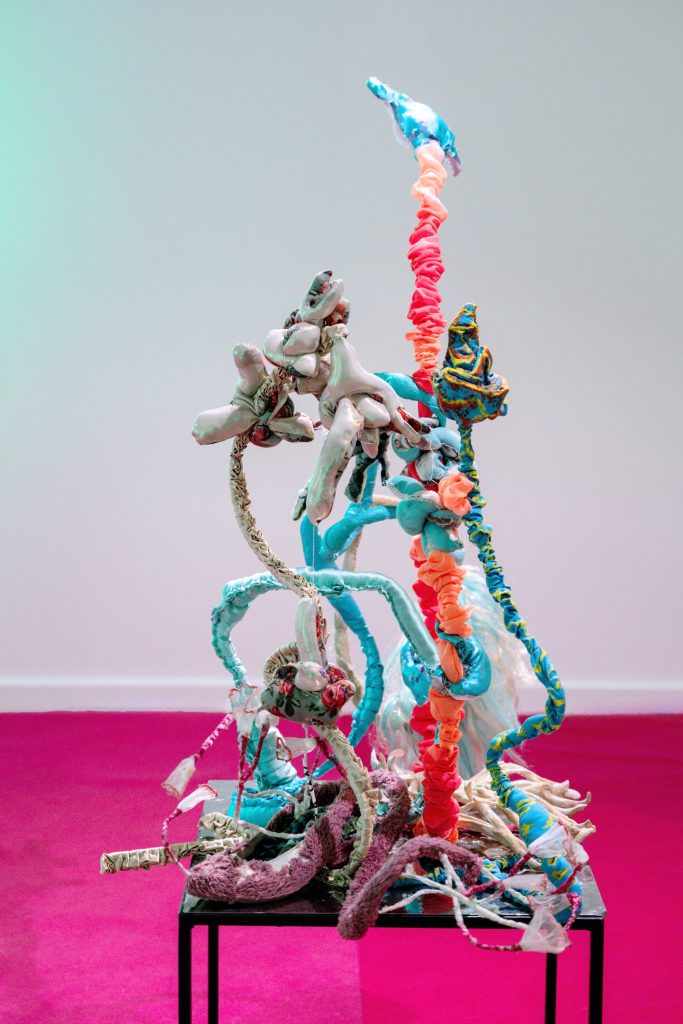
„Ogród Autopoietyczny” wyrasta z tego, co zapomniane.
Z fragmentów tkanin, śladów użytkowania i przedmiotów odłożonych na margines codzienności powstaje krajobraz powolnej przemiany.
“Autopoietic Garden” grows from what has been forgotten.
From fragments of textiles, traces of use, and objects set aside on the margins of everyday life, a landscape of slow transformation emerges.
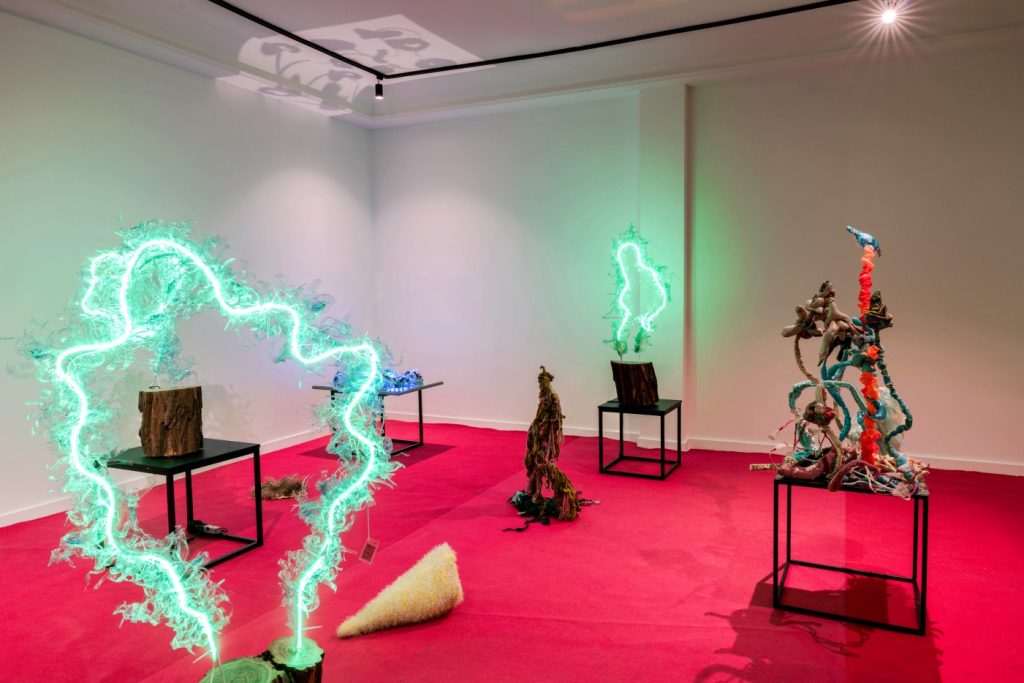
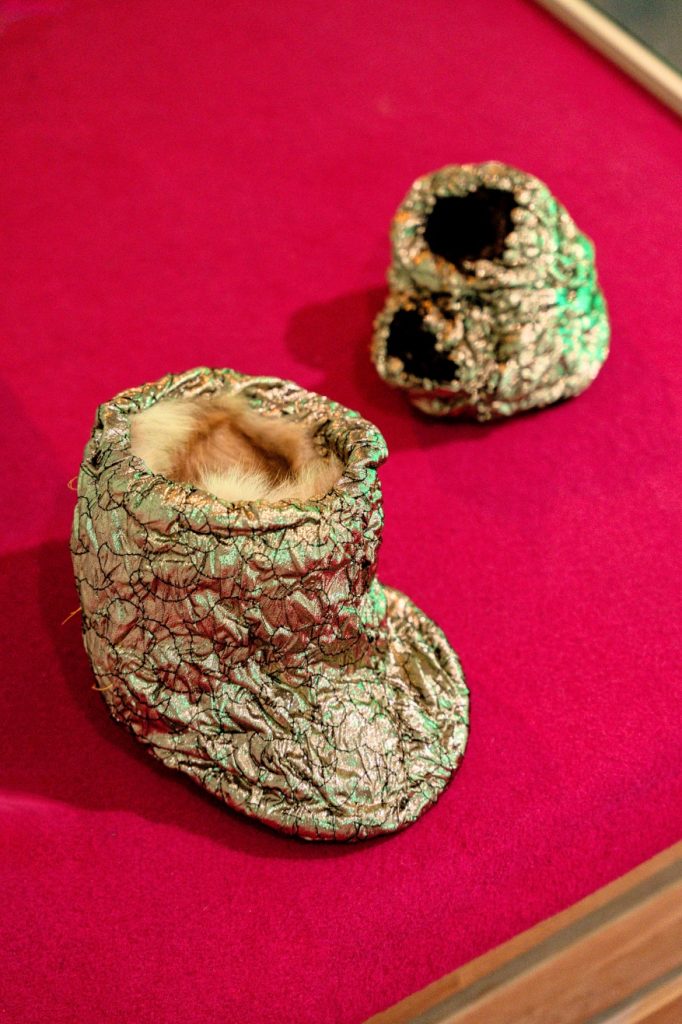
W tej przestrzeni resztki stają się tekstylnymi skamielinami. Delikatne formy przechowują pamięć dotyku, ślady historii i emocji, które nie zniknęły, lecz przekształciły się w subtelny zapis trwania. W ich strukturach splatają się żal, troska i nieśmiała obietnica odnowy.
In this space, remnants become textile fossils. Delicate forms preserve the memory of touch, traces of history, and emotions that have not disappeared but have transformed into a subtle record of persistence. Within their structures, grief, care, and a quiet promise of renewal intertwine.

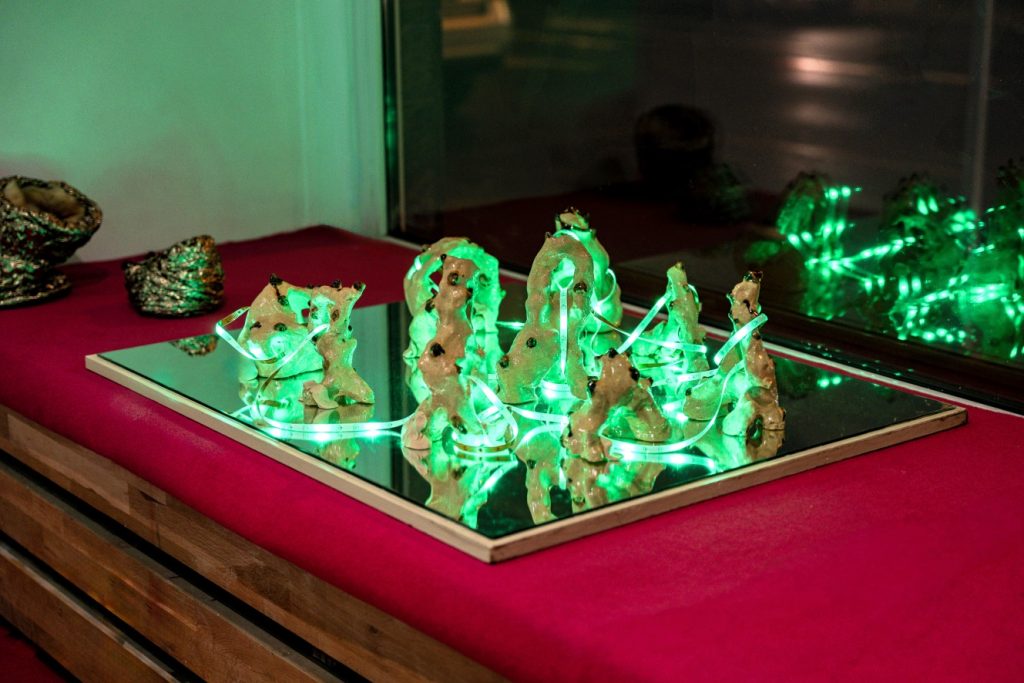
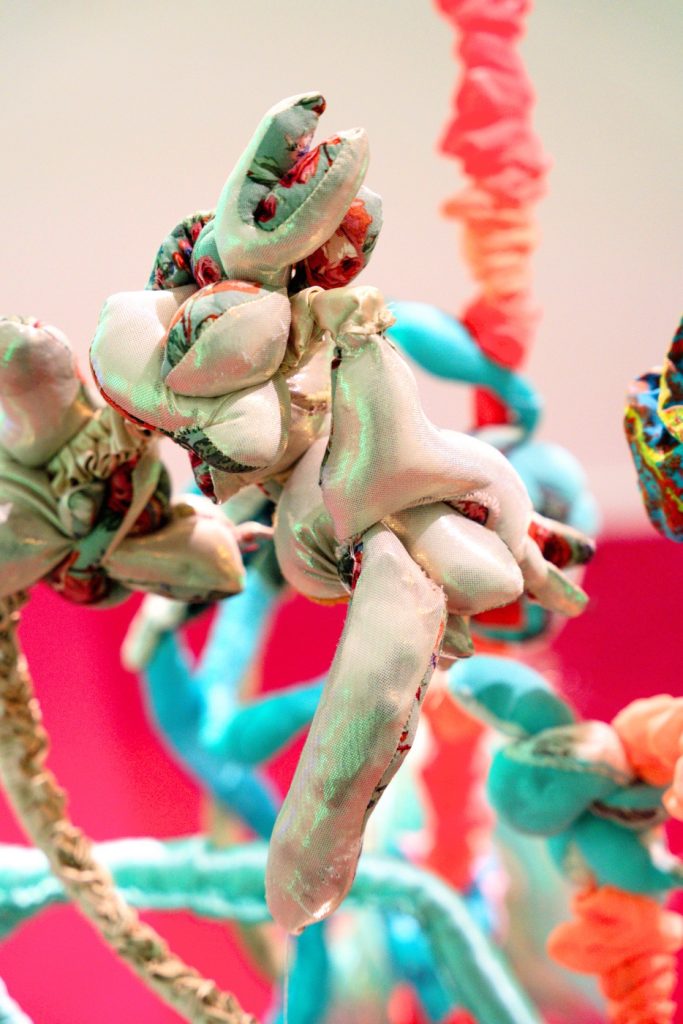
Ogród jest miejscem współzależności. Materiały, dyscypliny i opowieści przenikają się tutaj jak korzenie pod powierzchnią gleby. Granice pomiędzy sztuką, rzemiosłem i naturą rozmywają się w gestach opieki i twórczego przetwarzania. Każdy element istnieje dzięki innym — w sieci relacji, która przypomina naturalne ekosystemy.
The garden is a place of interdependence. Materials, disciplines, and narratives permeate one another like roots beneath the surface of the soil. Boundaries between art, craft, and nature dissolve through gestures of care and creative reworking. Each element exists through others — within a network of relations resembling natural ecosystems.
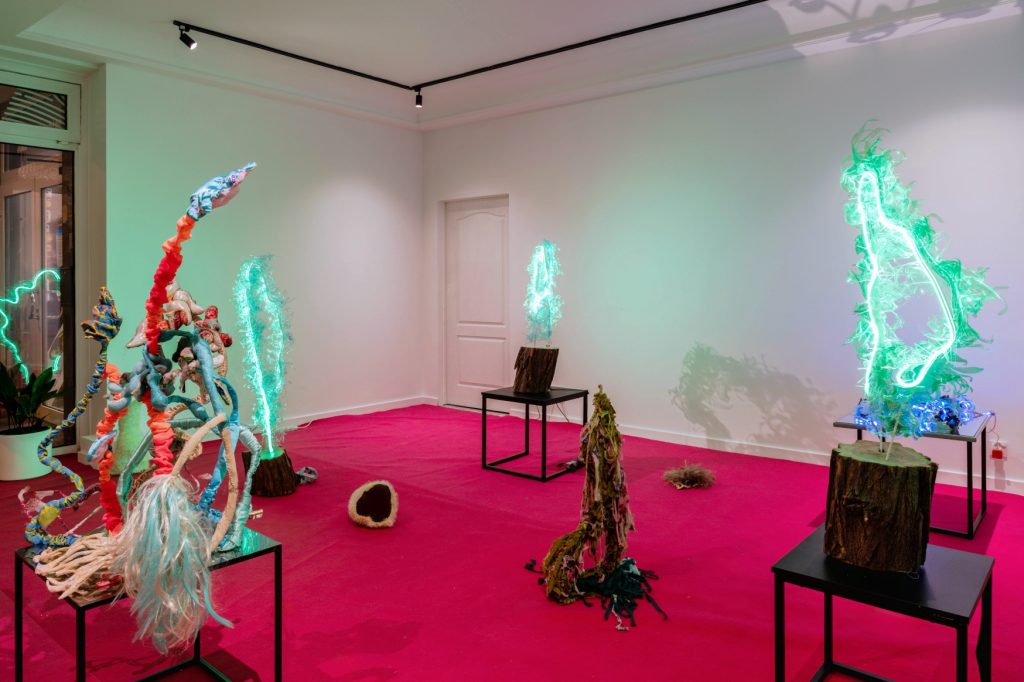
Wystawa zaprasza do przeniesienia sposobu obserwowania przyrody do przestrzeni galerii. Przebywanie w tym ogrodzie może przypominać powolny spacer po lesie albo leżenie na łące: moment zawieszenia, w którym uwaga wyostrza się na drobne ruchy materii, na cichy rytm przemiany.
The exhibition invites a shift in perceiving nature into the gallery space. Being within this garden may resemble a slow walk through a forest or lying in a meadow — a suspended moment in which attention sharpens toward the subtle movements of matter and the quiet rhythm of transformation.

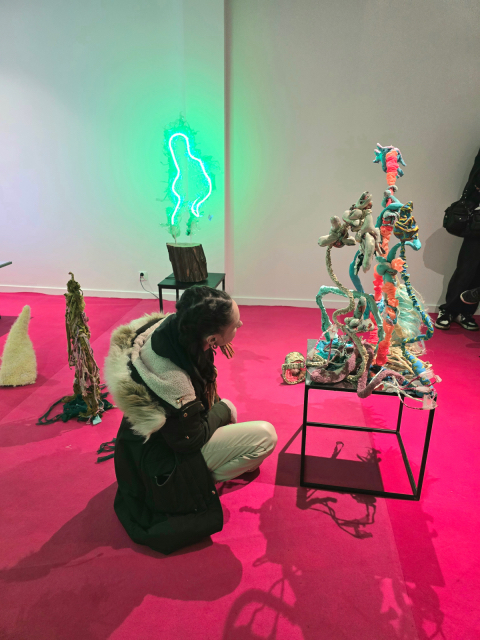
W czasie naznaczonym kryzysem „Ogród Autopoietyczny” proponuje zwolnienie tempa. Zachęca do wyobrażenia sobie odporności nie jako siły dominacji, lecz jako zdolności do regeneracji i współistnienia. Sztuka pojawia się tu nie jako zamknięty obiekt, lecz jako wspólna praktyka — przestrzeń spotkania, troski i możliwej przyszłości.
In a time marked by crisis, “Autopoietic Garden” proposes a slowing down. It encourages imagining resilience not as a force of domination, but as the capacity for regeneration and coexistence. Art appears here not as a closed object, but as a shared practice — a space of encounter, care, and a possible future.


Przestrzeń medytacyjna „Ogrodu Autopoietycznego” powstała dzięki Stypendium Miasta Poznania.
W trakcie wystawy miał miejsce poetycki performans Cezarego Markiewicza i Krystiana Zakrzewskiego, twórców profilu TARGOWISKO MYŚLI. Zainspirowani różnorodnymi środowiskami wystawy przygotowali poetycką podróż przez „Ogród Autopojetyczny”.


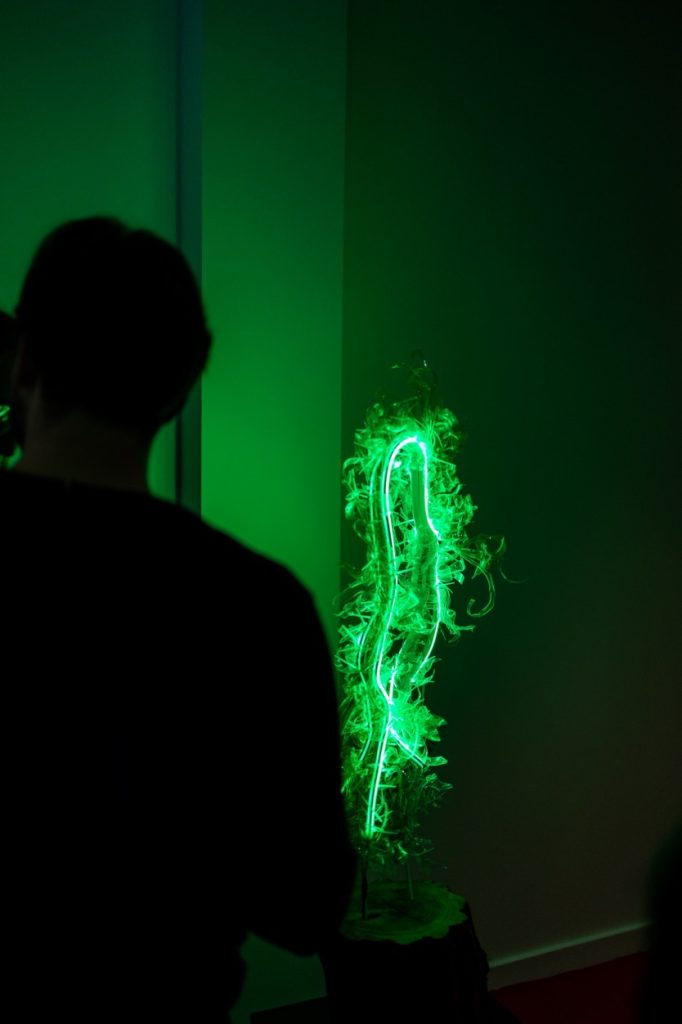
The meditation space of the „Autopoietic Garden” was created thanks to a scholarship from the City of Poznań.
A poetic performance by Cezary Markiewicz and Krystian Zakrzewski, creators of the TARGOWISKO MYŚLI (THE TARGET OF THOUGHTS) profile, took place during the exhibition. Inspired by the diverse environments of the exhibition, they prepared a poetic journey through the „Autopoietic Garden.”